Loading...
Producing citation-ready academic writing while checking for originality is consistently slowed down by software that either invents sources or makes you switch between multiple tools. Most academic writing assistants limit reference accuracy, hide plagiarism checks behind premium paywalls, or gate advanced features inside unclear subscription plans. This breakdown compares real-time citation integration, AI detection, and collaboration support so you can pick the tool that best fits your workflow without risking missed references or paying for features that are not delivered.
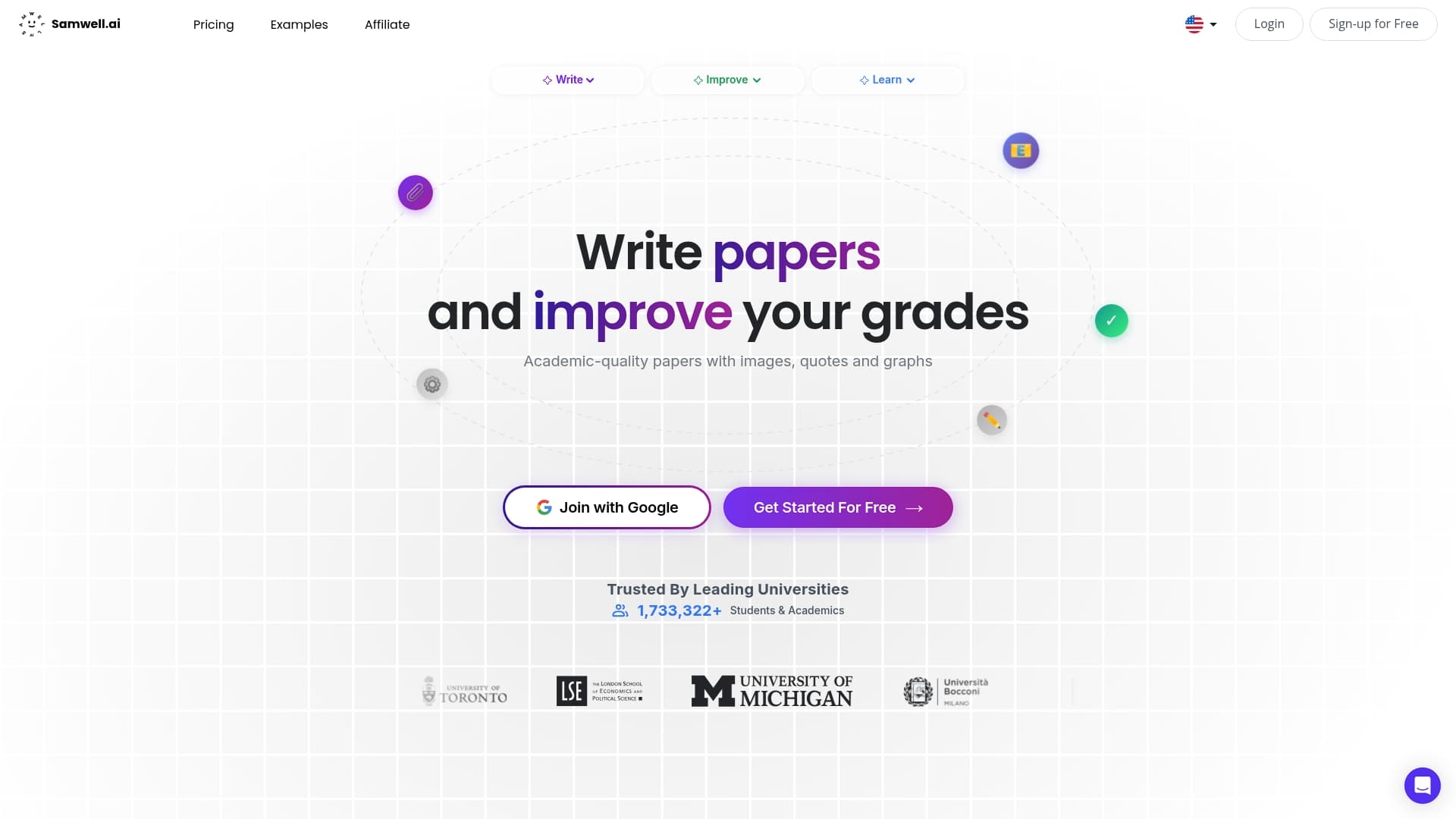
The vendor reports over 3 million users, a scale that shows broad academic uptake. Samwell.ai pairs a citation-first workflow with a vendor-described Semihuman.ai technology intended to reduce plagiarism risk while producing human like prose.
Samwell.ai focuses on long form academic workflows and citation fidelity. Key capabilities include
Authentic citations backed by over 20 academic libraries are the single largest differentiator. That citation layer lets the AI cite sources directly instead of inventing references, which reduces the manual verification you usually need after a first draft.
Students, researchers, and instructors who write long form, citation heavy work and who want an all in one environment for drafting, citing, and integrity checks. Ideal for thesis authors, literature review writers, and collaborative academic teams.
The presence of a citation first pipeline plus purpose built drafting tools like Power Editor and Guided Essays changes how you iterate. Instead of patching citations into a finished draft you get citation aware drafts early, letting you validate sources as you write.
A university professor used Samwell.ai to accelerate grading by checking citation accuracy, generating structured feedback, and producing short lecture outlines from verified sources. A graduate student assembled a thesis draft, integrated charts and tables, and exported a citation ready document for committee review.
A free plan lets you try the editor with a 1,000 word allowance. Premium plans start at $12 per month for roughly 200,000 words plus access to extended features such as expanded citation lookups and enhanced export formats.
Website: https://samwell.ai
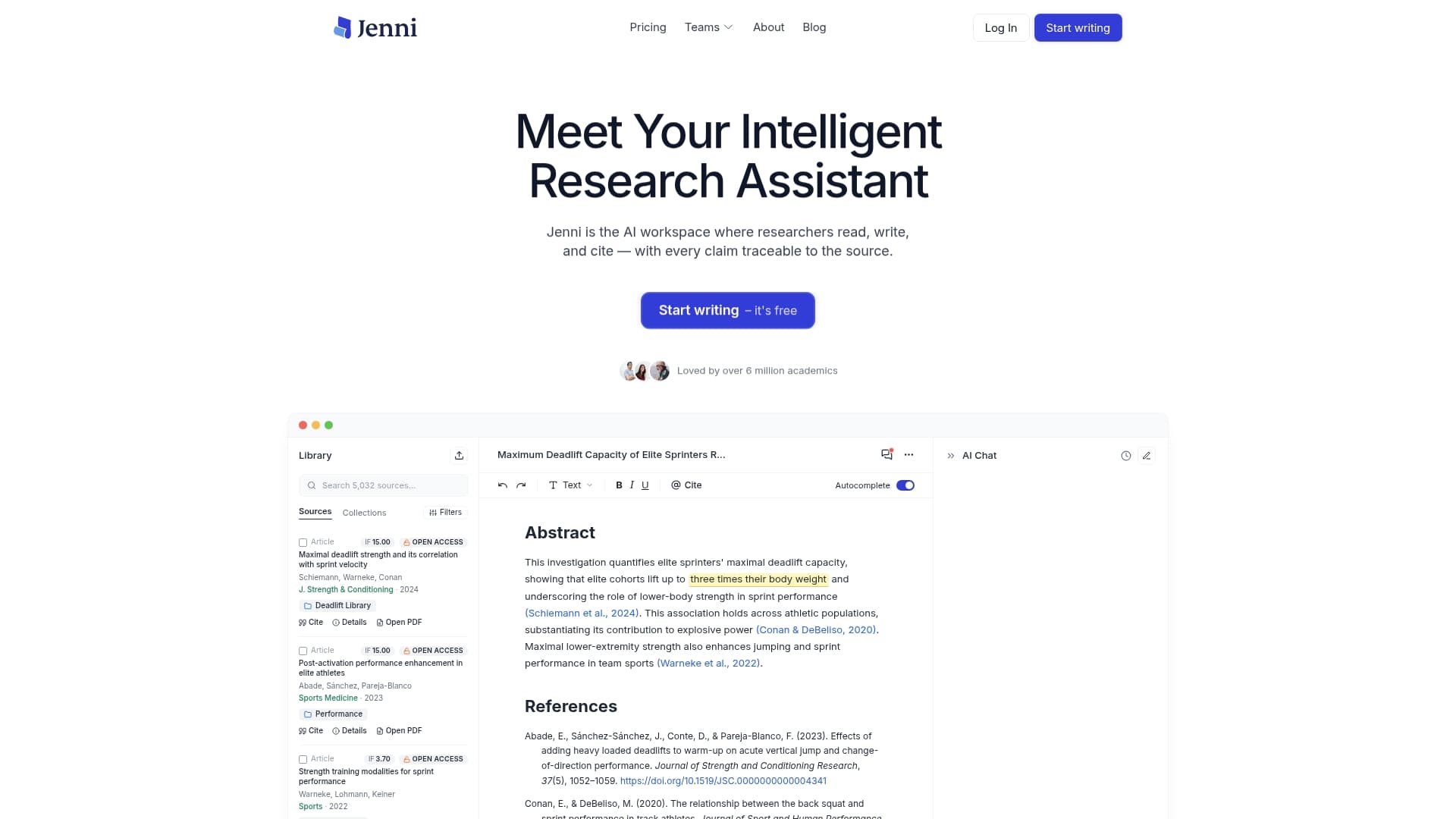
Jenni reports more than 6 million academics use the product, a user figure the vendor cites as evidence of wide adoption. It combines a research workspace with threaded source links so you can read, write, and cite inside a single interface built for verification.
Jenni combines a writable research workspace with built-in source traceability and collaborative editing. The result is a single environment where citation management, literature review, and manuscript collaboration coexist, reducing context switching between reference managers, document editors, and PDF viewers.
If your team relies on a lightweight editor and minimal training, Jenni’s richer feature set can feel heavy. Solo writers who only need occasional citations may prefer simpler, cheaper tools.
If you require fully automated provenance with no manual verification, Jenni does not remove that burden; the platform reduces friction but does not replace rigorous fact checking.
Researchers, graduate students, and academic teams building publishable manuscripts who need traceable citations and collaborative review. Labs running systematic reviews or multi-author manuscripts will get the most value from the integrated source and coauthor workflows.
A research group assembling a systematic review imports hundreds of PDFs, tags relevant sections, and drafts the methods and results inside Jenni. Coauthors comment inline and link each claim to a PDF excerpt, producing a manuscript where every evidentiary statement is traceable for peer reviewers.
Free tier with limited features for casual use. Plus at $12/month adds extra capabilities. Pro at $29/month unlocks unlimited usage and priority support for teams that need continuous, high-volume access.
Website: https://jenni.ai
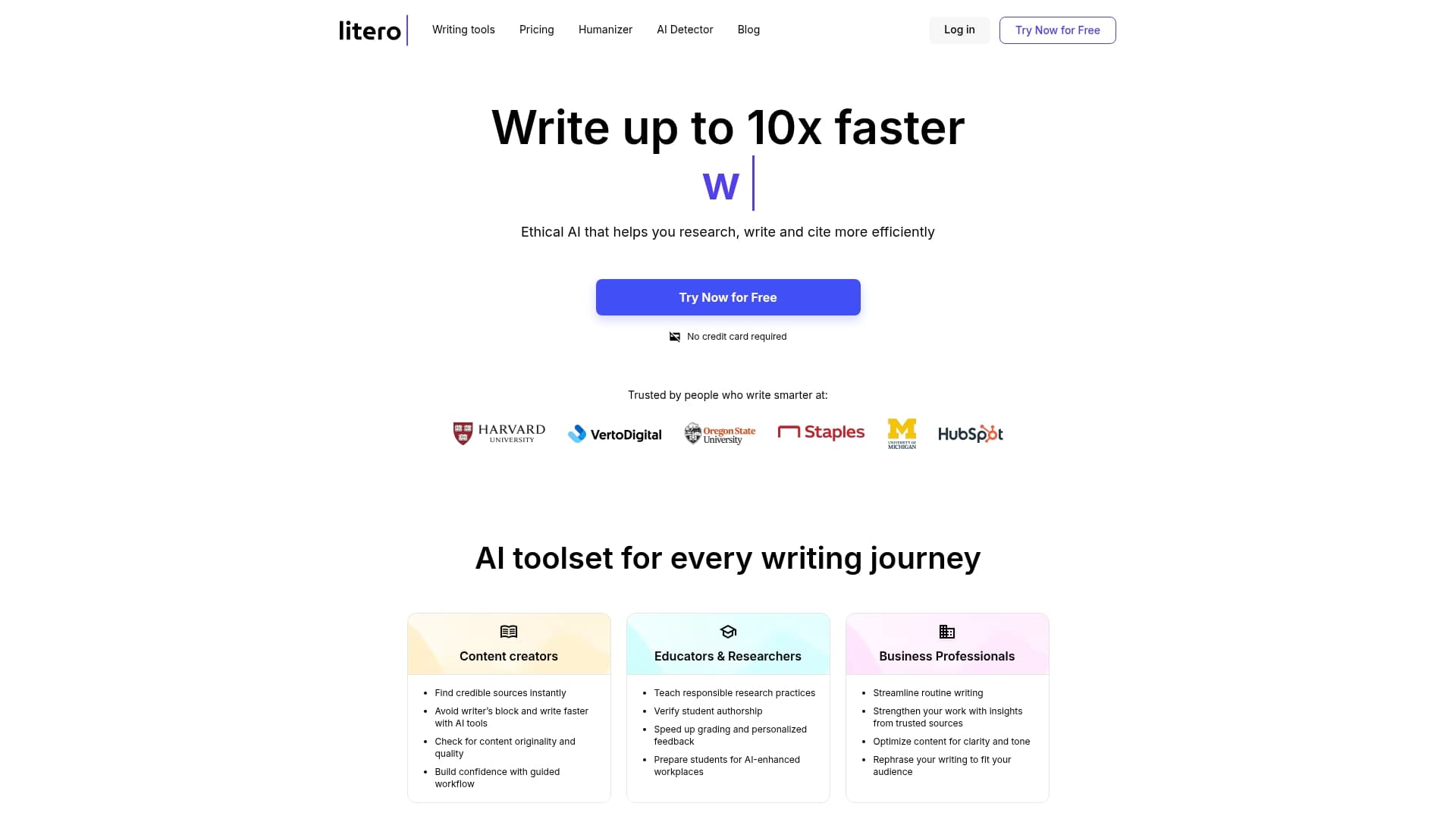
Source-based AI that ties writing suggestions to verifiable scholarly sources is Litereo.ai's main claim. The workflow emphasizes authorship and ethical citations while offering tools for outlining, source verification, and real-time AI detection.
Litereo's documentation cites usage by Harvard, Michigan, Oregon State, Staples, and HubSpot in its marketing materials.
Litereo bundles a set of tools aimed at research-driven writing.
Litereo.ai focuses on source-backed assistance rather than generic text generation. The AI links suggestions to scholarly materials and presents citation options inside the editor. That approach positions it more as a research workflow assistant than a freeform content factory.
If you need automatic bibliographic synchronization with a university library system Litereo will feel thin. Teams that require real-time API access to institutional databases or fully automatic citation imports will need a different tool.
If your workflow depends on a single-click database of primary sources you will be frustrated by the manual linking and verification steps.
Researchers, graduate students, and educators who prioritize verifiable sources and preserving their own voice will get the most from Litereo. It suits writers who want AI that points to evidence rather than replaces their argumentation.
A graduate student assembles a literature review by using the Outline Builder to map sections, pulls candidate sources with the Citation Tool, then runs the AI Detector before submission. The process reduces time spent switching between search engines and word processors.
Litereo offers a free plan with limited features. Paid plans start at $7.9 per month billed annually for access to unlimited tools and the full citation and drafting feature set.
Website: https://litero.ai
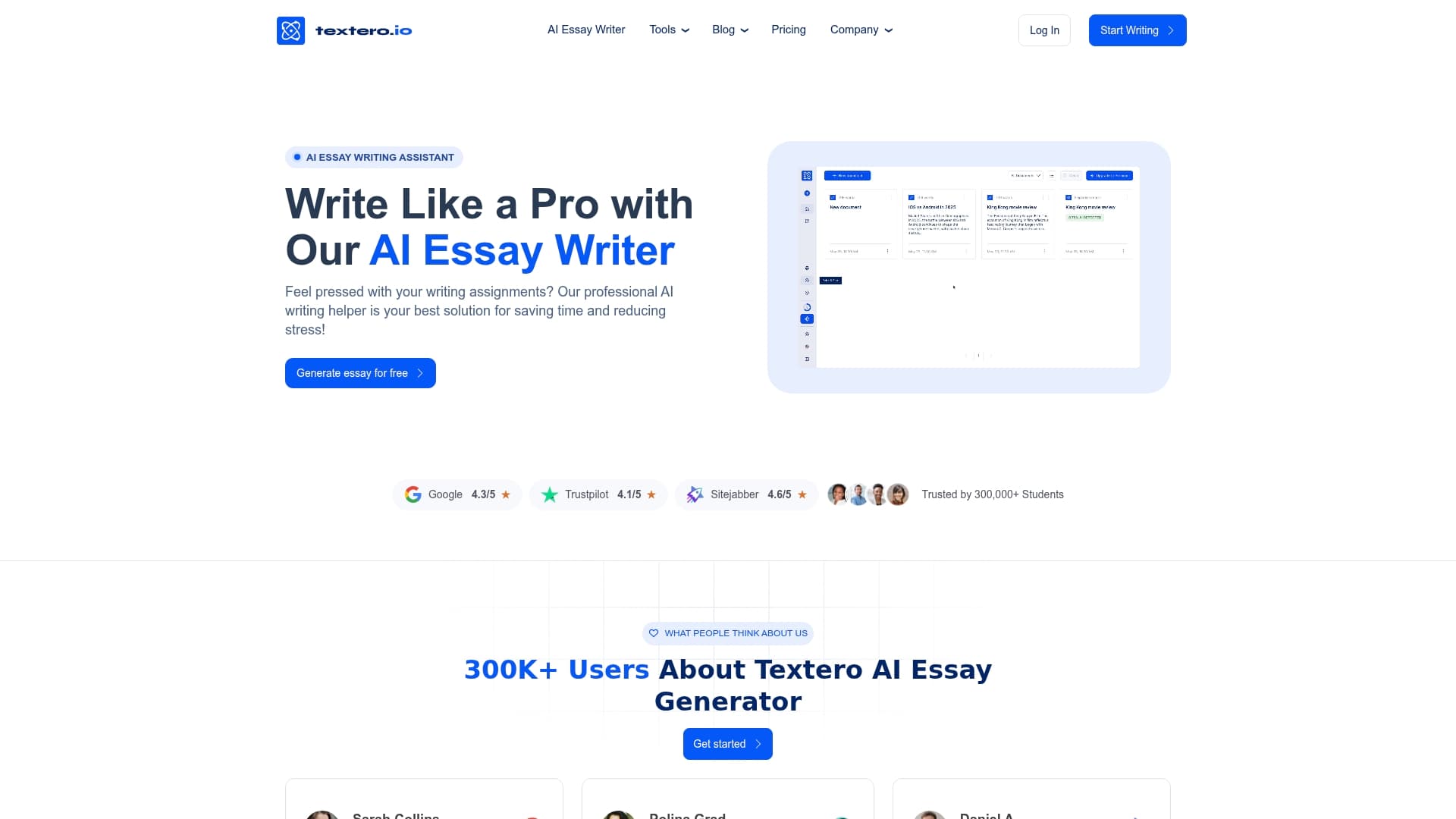
Premium subscriptions start at $8.25 per month when billed annually and include unlimited credits, commands, and document uploads. The platform pairs essay generation with built-in plagiarism and AI content detection tools aimed at academic workflows.
Textero positions its strength on advanced source management and citation fidelity, plus integrated detection for plagiarized or AI-authored text. Compared with Samwell, Textero leans more narrowly toward citation handling and source-driven workflows rather than a broader suite of guided essay generation and power editing.
If your institution requires provable originality with institutional plagiarism logs or signed author attestations, Textero’s mixed trust signals and user-reported issues could make it a risky primary drafting tool. Large departments that need centralized billing and clear refund policies may find the reported subscription problems a headache.
You if you are a student or researcher who needs fast, structured drafts and solid citation handling. Textero suits users who want a single place to upload sources, generate outlines, and preflight documents for plagiarism or AI detection.
A graduate student uploads a folder of journal PDFs, uses the source tools to generate formatted references, then asks Textero for chapter-length outlines. The student drafts chapters from those outlines and runs the built-in checks before handing drafts to their advisor.
A Free plan is available for basic use. Paid plans start at $8.25 per month billed annually and advertise unlimited credits, commands, and uploads. The pricing model makes experimentation inexpensive but read the cancellation and billing terms carefully.
Website: https://textero.io
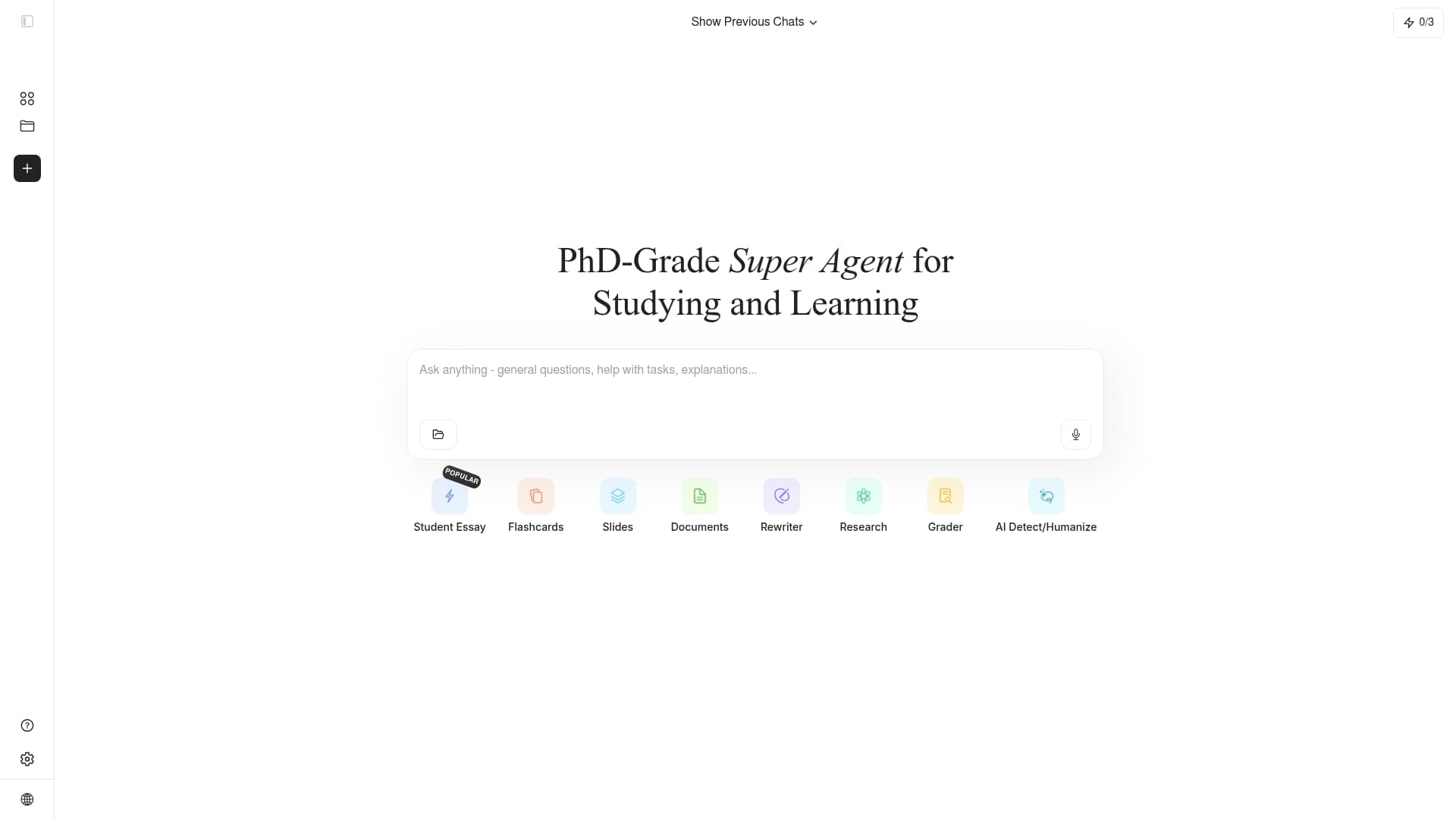
A free tier includes a plagiarism checker and language tools alongside AI writing, research, and citation helpers. Users report useful features for quick citation generation, but many reviews also describe slow processing and inconsistent output quality.
AI-driven content creation for essays, research papers, and dissertations sits alongside research and citation support. The platform bundles citation generation, grammar correction, paraphrasing, summarization, and rewriting utilities into a single web interface.
Most tools are accessible in multiple languages and the interface works across devices. Several basic features are available without payment, which lowers the barrier for students on a tight budget.
What separates this tool is a wide set of academic-focused utilities combined in one place and a visible free tier that includes citation and plagiarism checks. That mix targets users who want research and formatting help without assembling separate extensions.
If you require consistently coherent first drafts for high stakes submissions, this tool may frustrate you. Teams that need fast turnaround or guaranteed output quality will find the reported performance issues and long processing times limiting.
Students, early stage researchers, and budget constrained academics who need help with citation formatting, quick summaries, or language checks will get the most from this product. Those needing polished, publishable prose from the first pass are not the ideal users.
A graduate student uses MyStylus.ai to compile citations and produce a first draft outline. The citation generator speeds reference formatting, but the draft requires manual reworking because sections are repetitive and some source attributions need verification.
A free tier is available with basic plagiarism checks and language tools. Paid plans exist for expanded features but the product data does not list detailed tier pricing or exact feature cutoffs.
Website: https://mystylus.ai
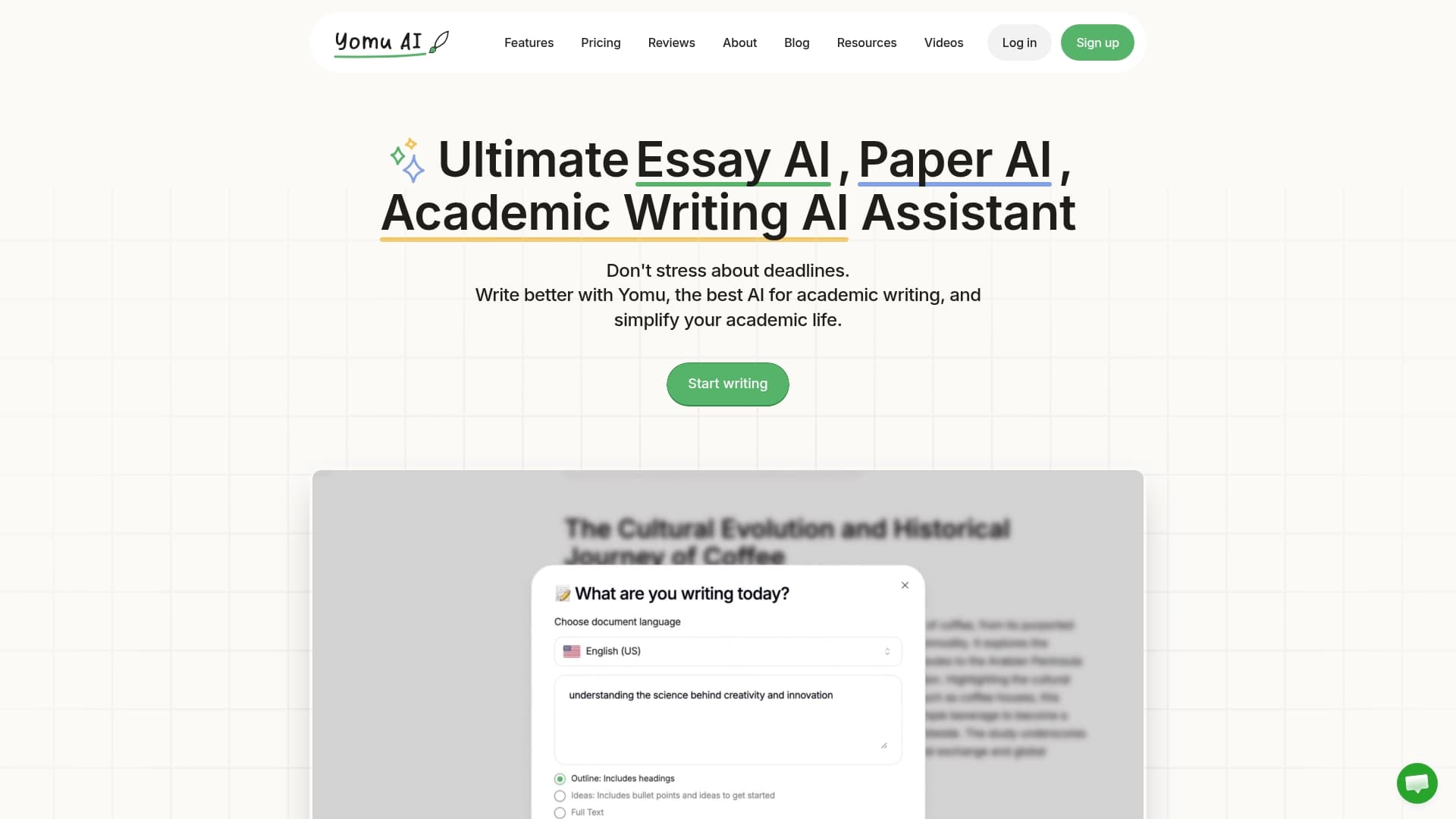
Yomu.ai packages document drafting, citation formatting, and originality checks into a unified academic assistant; that integrated focus is the product’s clearest selling point. The vendor positions the platform as a single place to write, cite, paraphrase, and verify originality.
The platform includes an AI-powered document assistant for drafting sections and giving feedback. It also offers autocomplete for sentences and paragraphs to speed drafting.
Tools for paraphrasing, expanding, shortening, and summarizing help reshape text quickly. Citation management integrates with Sourcely to pull and format sources. The built-in plagiarism checker addresses originality as part of the writing flow. Several features like figure, table support, and grammar tools are listed as planned.
Yomu.ai’s main angle is the tight coupling of writing aids with citation and originality workflows. That close pairing reduces context switching for students and researchers who move between composing text and verifying sources during the same session.
If you require enterprise-grade billing transparency and documented refund procedures for departmental procurement, Yomu.ai may not meet procurement standards based on the reviewer complaints above. Also avoid it if your thesis process relies on built-in figure and table editing today rather than planned features.
Students and academic researchers who want a single tool to draft text, manage citations, and run originality checks. Ideal when you value a compact workflow for thesis chapters, term papers, or literature reviews rather than a suite of separate point tools.
A university student drafts thesis chapters in Yomu.ai, uses autocomplete to expand paragraphs, applies paraphrasing tools to refine literature review passages, formats references via the Sourcely link, and runs the plagiarism check before submission.
The product data does not provide public pricing. The vendor entry lists pricing as not applicable and informational only, so verify current plans and billing terms directly on the vendor site before subscribing.
Website: https://yomu.ai
Intro pre-write:
Competitor win pre-write:
Best Fit uniqueness check:
Our Pick pre-write:
{"text":"## Comparative Analysis of Academic Writing Assistants
The range of citation tools provided by the academic writing platforms varies significantly, each catering to specific needs within research, drafting, and verification workflows. Below is a detailed comparison focusing on unique capabilities and applicable use cases.
Samwell.ai stands out for its authentic citation pipeline that integrates over 20 indexed academic libraries, reducing manual reference verification. By contrast, Textero excels with its rapid citation handling through metadata extraction tools, but its reliability concerns make careful review necessary. Jenni AI, meanwhile, enables linking claims directly to source documents, which simplifies detailed verifiability but requires significant user-facilitated integration. Researchers valuing, ready-to-use sources may prefer the structured precision of Samwell.ai.
For teams emphasizing collaboration, Jenni AI offers real-time direct commenting and citation-to-source linking, fostering efficient co-authoring environments. Litereo.ai provides tools like the Outline Builder, connecting planning with paragraph execution, but often requires manual adjustments for source integration. In comparison, Samwell.ai extends these capabilities by incorporating real-time collaboration within its citation-focused framework, albeit with limited support for niche technical research databases.
For individuals prioritizing precise citation integration and academic drafting tools, Samwell.ai provides a specialized solution. However, researchers focused on interactive coediting or requiring traceable source integration may find Jenni AI better suited to those needs."}
When selecting an academic writing assistant, understanding their capabilities in citation integration and extended writing features is essential for an informed decision.
| Product Name | Key Feature | Ideal For | Pricing | Notable Limitation |
|---|---|---|---|---|
| Samwell.ai | Authentic citations from databases | Long form academic works like theses and reviews | Starting at $12/month | Limited engineering research coverage |
| Jenni AI | Citation traceability to PDFs | Publishable team manuscripts needing source verification | Free; Plus $12/month; Pro $29/month | Complex features require significant onboarding |
| Litereo.ai | Verifiable source suggestions | Researchers valuing ethical citations | Free; Paid $7.9/month annually | Lacks integrated real-time source database access |
| Textero | Enhanced citation tools | Fast, structured drafting and source handling | $8.25/month annually | Trust issues over subscription management reported |
| MyStylus.ai | Broad toolset in a free tier | Budget-constrained students requiring basic support | Free; Paid plans available | Frequent output quality issues identified in reviews |
| Yomu.ai | Tight integration of writing and citations | Compact workflows for theses and term papers | Not disclosed | Reliability and subscription complaints reported |
Students and researchers often struggle with writing long, citation-heavy papers while ensuring originality and source accuracy. Many AI academic writers fall short by generating content that requires extensive manual citation verification or produces generic prose lacking a clear academic voice. Samwell addresses these pain points with its Semihuman.ai technology that minimizes plagiarism risks and produces well-cited, humanlike text from the start. The platform’s Power Editor and Guided Essays help you structure and expand your drafts effortlessly while maintaining full control over source selection and citation style.
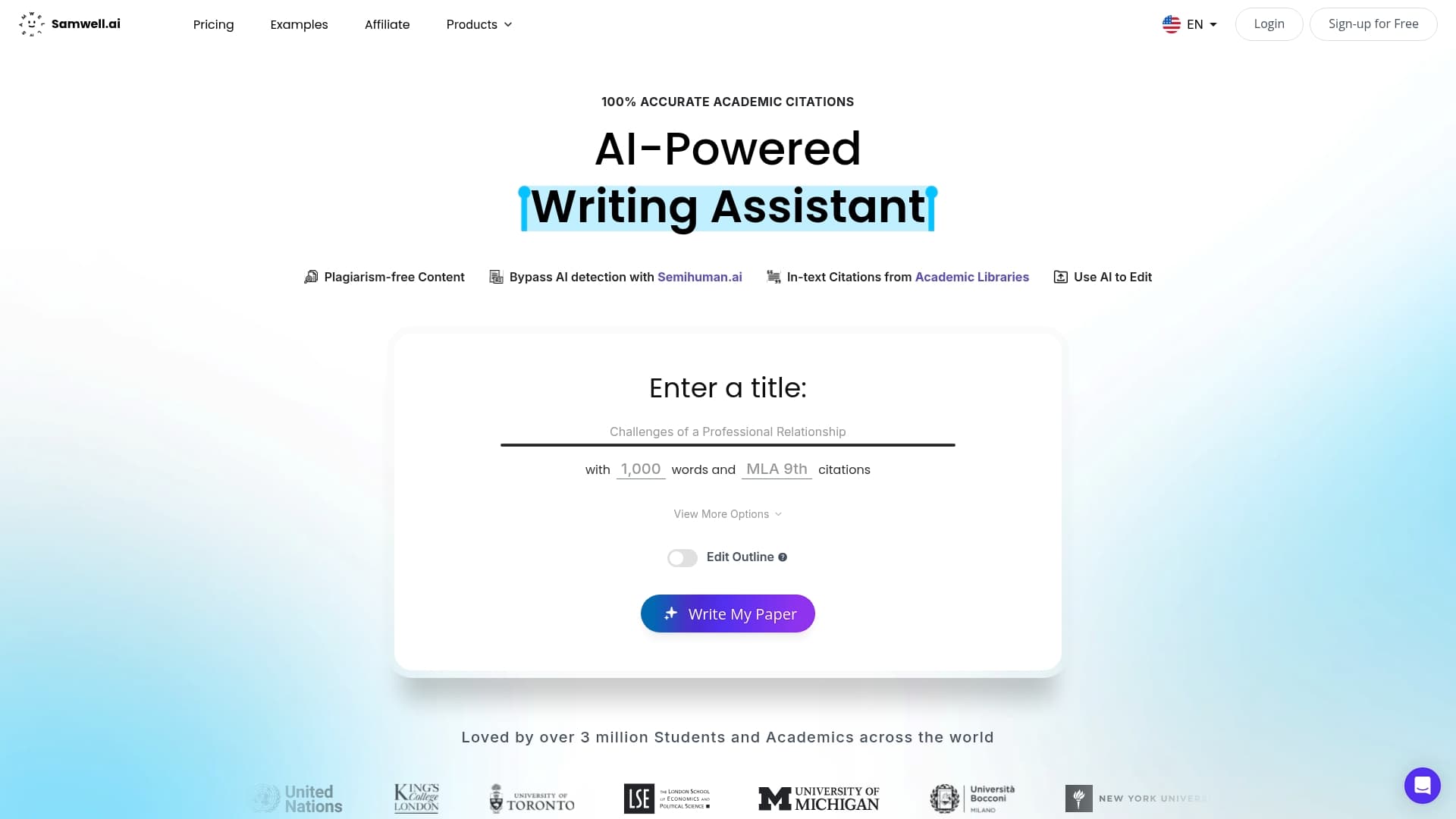
Stop spending hours fixing citations and worrying about AI detection. Visit Samwell.ai to experience an AI academic writer designed for serious academic work. Get started with a customized, citation-aware draft today and improve your writing precision with real-time AI detection checks.
Samwell excels in supporting true long form projects, offering AI-assisted paper writing and editing for drafts up to 50 pages. Its citation-first workflow reduces the time spent hunting down sources, as references originate from indexed academic libraries rather than generic web scraping. To maximize your academic writing efficiency, consider starting with Samwell's capabilities.
Jenni AI provides excellent real-time collaboration and commenting features, which streamline the editing process for academic teams. Samwell supports collaborative editing and integrated plagiarism checks, but may be suited best for those focused on long form drafts rather than immediate real-time feedback. Depending on whether you prioritize structured drafting or collaborative speed, select the tool that matches your workflow best.
Jenni AI offers citation formatting across 2,600 styles, making it incredibly versatile for diverse academic needs. In contrast, Samwell supports citations from over 20 databases and is primarily focused on MLA and APA formats, making it ideal for standard academic writing. Choose according to your specific citation requirements to align with your project goals.
Samwell features an authentic citation pipeline that links directly to over 20 academic libraries, allowing for accurate citations without the need for manual verification. This capability reduces the risk of plagiarism and speeds up the writing process, making Samwell particularly beneficial for extensive academic projects like theses or literature reviews. This feature could significantly enhance your writing workflow, especially with citation-heavy documents.
Textero offers advanced source management and integrated plagiarism detection to ensure the quality of drafts. However, user reviews indicate some outputs contain issues that may require careful verification to meet academic integrity standards. It's advisable to utilize their features cautiously and conduct quality checks before final submission.